Alex Gadda

MASHMORRA'S DUNGEON

A hypercasual minigame-based Android game
Overview
Mashmarra is the rebellious daughter of the dungeon overlord, will she escape her boring royal life?
Mashmorra's Dungeon is fusion between WarioWare and the dungeon-crawling genre,
where each room of the dungeon is solved by completing a mini-game.
Mashmorra, the protagonist, is the rebellious daughter of the dungeon overlord and wants to escape her boring life.
-
Team: I've had the pleasure of working with 13 very talented people (6 designers, 3 concept artists, 2 3D artists and 2 programmers).
-
Objective: we were tasked with creating an hyper casual mobile game structured as a collection of minigames, using at least 3 different inputs, and a complete monetization model.
My role
Lead Designer
Gameplay, Technical and Economy Designer
Genre
Hyper-casual minigames
Platform
Android
(Unity)
Dev. Time
3 Months


Clips from the game

What I did
-
I lead the design of the game from the initial concept, to mechanics and creative vision.
-
Following what I think is the philosophy behind true leadership: as a leader you should not be that of the one who makes all of the decisions, your mission is to empower your colleagues, to foster their potential, to listen.
-
-
I pitched the game and collected feedbacks from experts, play testers and the team members continuously throughout the development period.
-
I collaborated with the producer on task assignments and kept a watchful eye on the overall status of the project, maintaining a continuous communication with the members of all departments.
-
I helped maintaining a coesive vision for the project and I directed the writing of the GDD.
-
I was responsible for the game’s economy design and balance.
-
Every in-game number, price, reward and progression logic are the result of extensive analysis and simulation through the use of spreadsheets, simulations and playtests.
-
-
As a Tech Designer I worked as bridge between designers and programmers, understanding both their needs, proposing algorithms and ideas that would translate design needs into implementable solutions. I also learned how to interact with the code-base and tools and shared this knowledge.
Economy Design
A deep understanding of the numbers driving the game's pacing and economy was essential to the project’s success.
My work focused on defining the numerical and logical systems that govern minigame behaviors, so to obtain a scalable and dynamic pace (as stated in the pillars defined below).
I designed and tested random extraction algorithms for selecting the next minigame, defined the different probabilities for their selection, and how difficulty and rewards increase across levels (referred to as "floors").
The game features a dual-currency economy: standard and premium.
Both can be earned through gameplay, though premium currency is significantly harder to acquire.
The game rewards player skill: higher levels correspond to greater rewards per minigame.
We also introduced Potions and Amulets (items that offer temporary or permanent bonuses to the player's character) to enhance long-term progression.
Each number was calibrated taking in consideration:
-
Playtest results: analyzing players' stats and behaviors.
-
Monetization needs.
-
Habits of the generic hypercasual player: how much do they play, how many sessions a day they play, what the difficulty should be…
Behind every number lies a meaning, my work was to understand data points and to infer the best choices.


Development reflections & Workflow
Conceptualization
Because the team didn’t have much experience with the genre, in the first phase of the project I focuses our energies on a thorough analysis of relevant references that focused on:
-
Mechanics and themes common in hypercasual mobile games;
-
Dynamics and overall gameplay experience offered in minigame-based videogames;
-
Monetization models and strategies common in hypercasual mobile games;
-
Average Session Length and other metrics used in mobile games;
After some brainstorming with the team we ended up with the final idea: a mix between the mini-games genre (along the lines of WarioWare or Dumbs Ways to Die) and the hypercasual mobile formula, all themed around dungeon-crawling, but rendered through a light and colorful cartoon aesthetic.


Pillars & Minigames
Keeping in mind the hypercasual target audience of our game, the nature of the project and the team capabilities, we established design pillars behind the minigames design. They should be:
-
Easy to learn, hard to master: a hypercasul audience does not want to spend many hours learning complex mechanics, they want to start playing fast and usually play in short sessions.
-
This requires that each minigame has intuitive controls and that the player objective is immediately clear.
-
-
Scalable: i.e. they should be based on variables that can change over time without manual intervention.
-
This makes possible for our minigames to increase in speed and complexity over time.
-
-
Instantly funny and addictive: each minigame must catch the player attention, be creative and offer plenty of feedbacks to enhance the play experience.
-
Easy to implement: an important pillar, given the fact that this was our first mobile project and we had to develop a minimum of 3 minigames.
After some brainstorming, reference analysis and testing, we ended up with 4 minigames we were all pretty happy about. I was responsible for the last one.
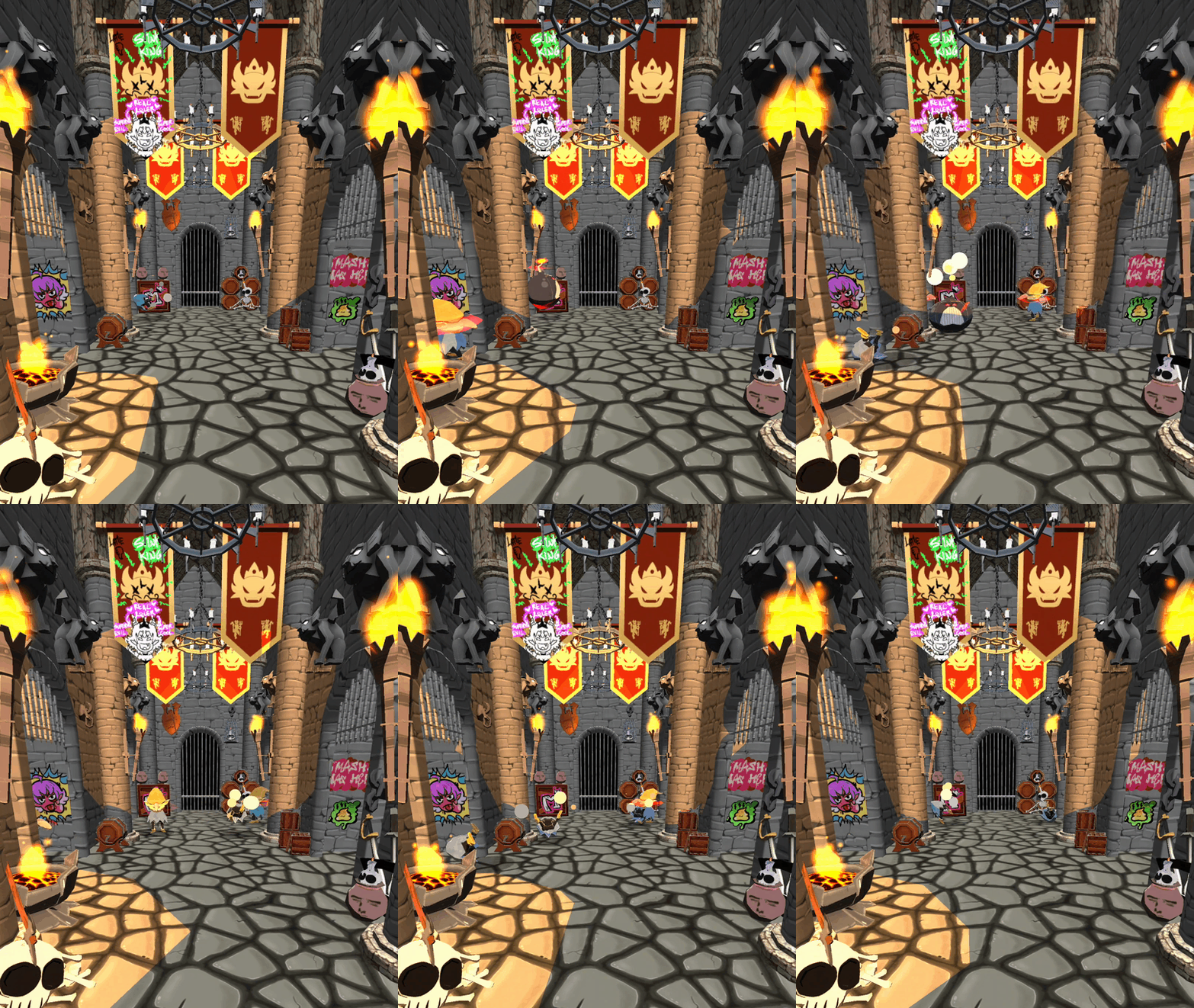
Slash the Monsters
Swipe to kill approaching monsters.
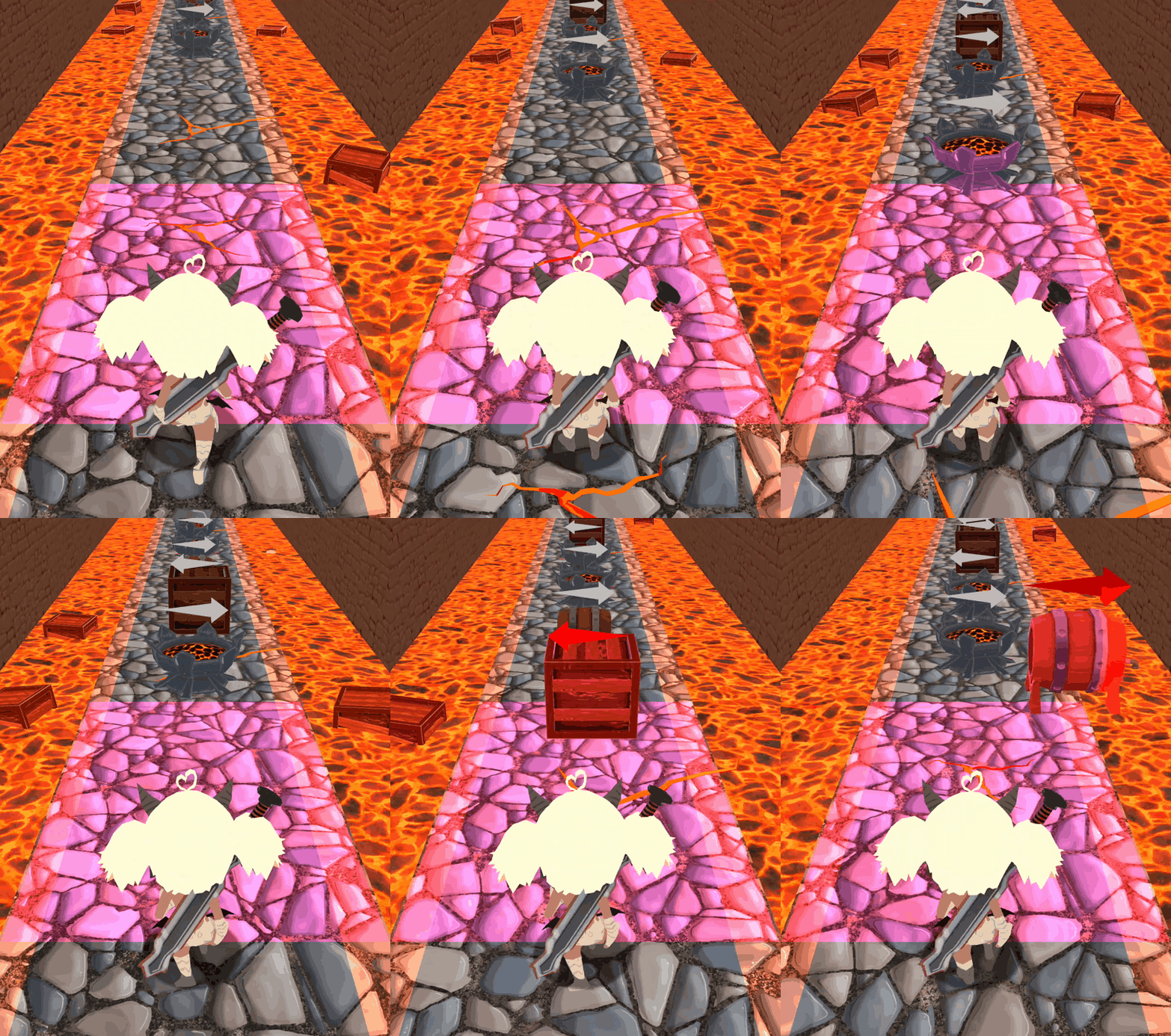
Clear the Way
Swipe to remove obstacle while the character is running.
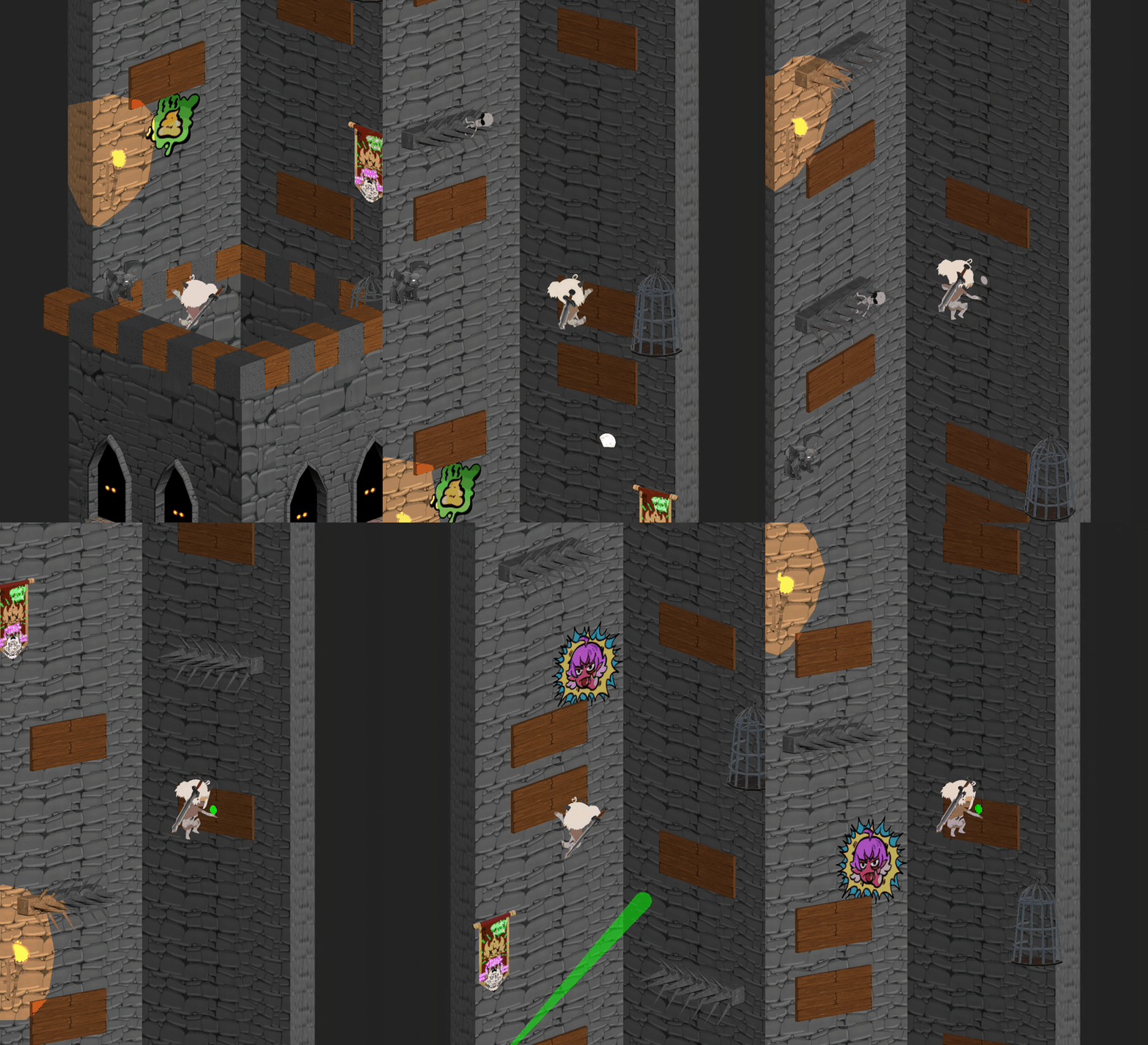
Climb the Wall
Tap, than drag and release to climb a tower filled with obstacles.
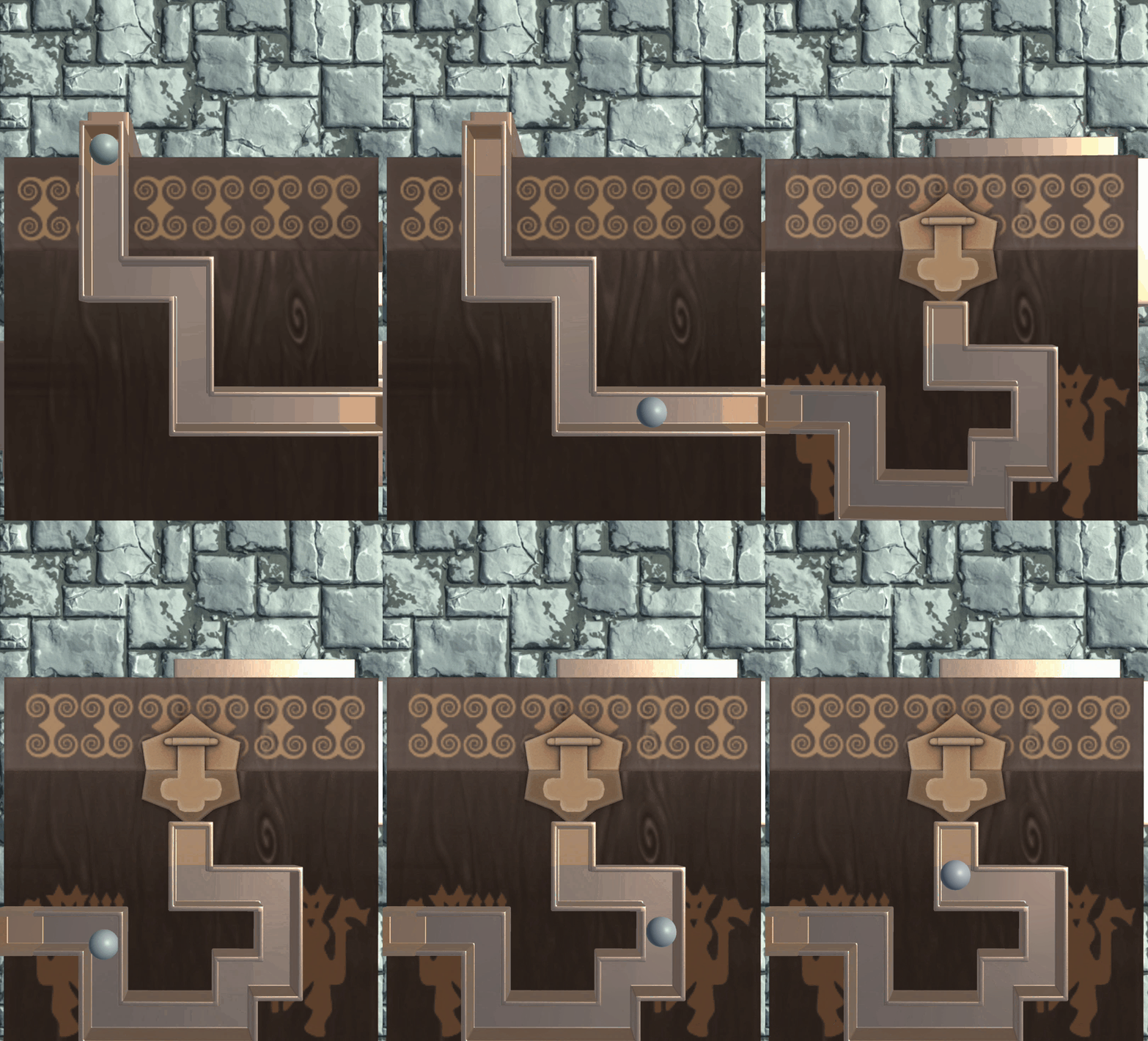
Unlock the Chest
Use the accelerometer to move a sphere along a path filled with holes.
I designed this one!
Feedbacks
We conducted numerous playtesting sessions within and beyond the academy. I treat these sessions with great importance, as I believe they provide critical insights to improve the game. In fact, one of my responsibilities was to draft and evaluate playtest documents.
Of these minigames, Slash the Monsters and Unlock the Chest have been especially successful because:
-
Slash the monster offered a frenetic and engaging gameplay experience, topped with excellent feedbacks (monsters dying and slashes sounds).
-
Unlock the Chest was a surprise for me, but it stands as a testament to the power of designing a game around a simple and aesthetically pleasing action, in this case the correlation between the tilt of the hand and the movement of a virtual sphere.
However, one minigame ended up being less successful: Climb the Wall, although entertaining when understood, was not intuitive enough for new players. Unluckily, we did not have the time to fix it, because it was the last to be developed, but we all learned a lot from it: It’s crucial to obtain a playable prototype as early as possible to test your design ideas (remember: games are not just ideas!).


